
The One-Sentence Rule
If your garage door worked fine all through hurricane season, the biggest risk heading into winter isn't the weather getting worse — it's the weather getting better and nobody checking on anything until something breaks. The exceptions: homes near the coast where salt air has been quietly working on hardware since June, doors that took on humidity swelling and never fully dried out, and anyone leaving town for the holidays without testing their opener's safety features first.
Why Winter Here Is Actually Different for a Garage Door
Port St. Lucie doesn't get a hard winter, but it does get a real shift. Humidity drops, afternoon downpours become less frequent, and overnight temperatures can swing 20-plus degrees from a warm day to a cool front coming through. That swing matters more than people expect — metal tracks and torsion springs expand and contract with temperature, and a door that's been fine all summer can suddenly start binding, squeaking, or closing unevenly once those cooler nights start showing up.
This is also the stretch where hurricane season officially winds down, which means it's the best window all year to catch and fix the damage that storm season left behind, before you forget about it until next June.
Check for Rust and Corrosion First
Salt air near the coast doesn't take a season off, and six months of humidity and storms is enough to start rust forming on hinges, rollers, and the bottom bracket even if you can't see it yet. Walk the door and look for:
- Orange or reddish streaking on hinges, tracks, or the torsion spring itself
- Rollers that look pitted or feel rough when you spin them by hand
- Bolts or brackets that have started to discolor
A light coat of a silicone-based lubricant on rollers, hinges, and the spring (not grease, which collects grit) will slow this down. If a spring already has visible rust or pitting, that's not a lubrication fix — a corroded spring is weaker than it looks and is more likely to snap without warning.
Listen for New Noises
Grinding, popping, or a door that jerks instead of moving smoothly is often a sign that track alignment shifted slightly during a season of heavy use and humidity swelling. Cooler, drier air can make these sounds more noticeable because the metal contracts and tightens up small gaps that were masked before. A noise that's new this month is worth checking now, not in March.
Test the Opener and Safety Sensors
This is the season homeowners travel — holiday trips, visiting family, snowbirds arriving for the winter. Before anyone leaves the house unattended for days at a time:
- Test the auto-reverse feature by placing a 2x4 flat on the ground where the door closes; it should reverse on contact
- Check that the photo-eye sensors near the bottom of the tracks are aligned and free of dust or cobwebs — a misaligned sensor can cause random reversals or a door that won't close at all
- Replace opener remote batteries now rather than finding out they're dead when you're loading the car
- If your opener has a vacation or lock-out mode, know how to use it before you're trying to figure it out from the airport
For businesses with commercial garage doors, this is also a smart time to confirm the door cycles correctly under full load, since holiday deliveries and foot traffic tend to pick up through the winter months.
Balance and Weight Check
Disconnect the opener and lift the door manually about halfway. It should stay in place on its own. If it drifts down or shoots up, the springs are out of balance — often from a season of heat and humidity affecting tension, or from wear that's simply caught up. An unbalanced door puts extra strain on the opener motor and is a common reason openers burn out well before they should.
Don't Forget the Small Stuff
Weatherstripping and bottom seals matter year-round here, but if yours took a beating during storm season, a quick visual check now — cracking, gaps, or sections pulled loose — is worth doing while you're already out there checking everything else.
When to Call In a Technician
Most of the checklist above is something any homeowner can do with a flashlight and twenty minutes. Call Port St. Lucie Garage Door Solutions when you run into any of these:
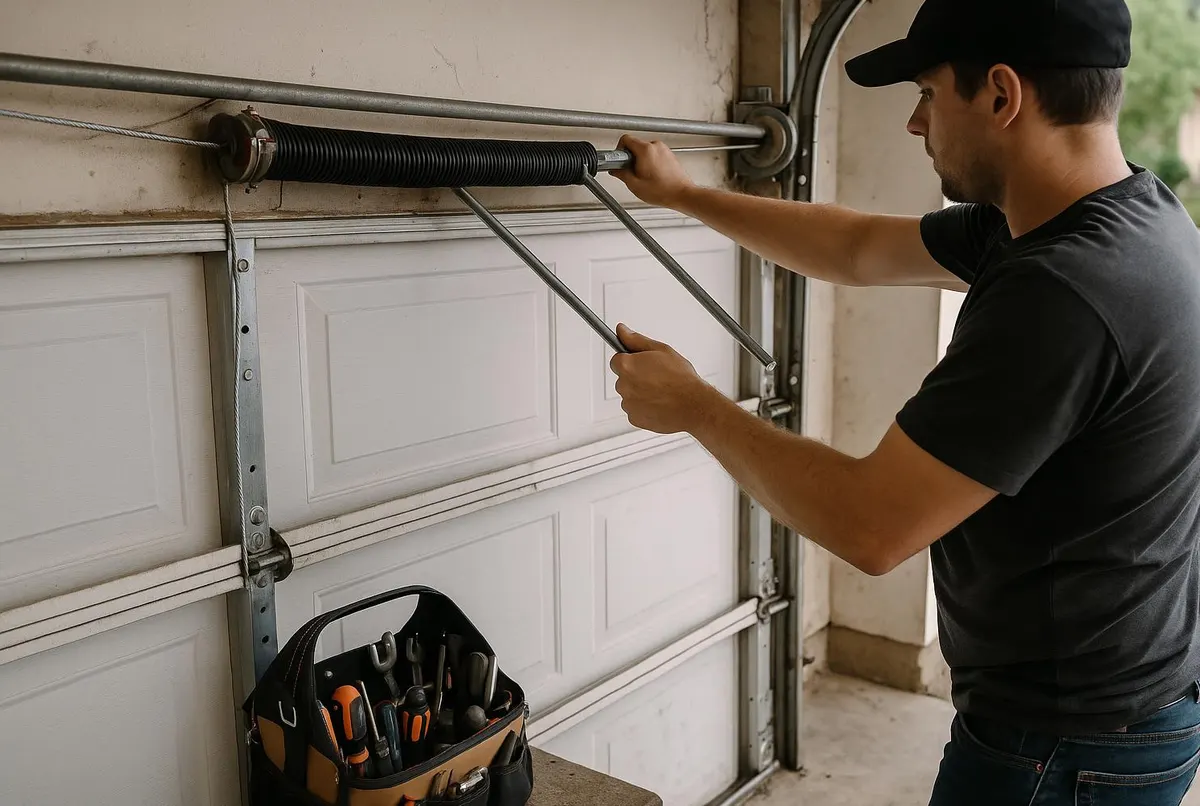
- A spring shows rust, pitting, or visible wear — spring replacement isn't a DIY job, and a failed torsion spring under tension can cause serious injury
- The door is out of balance and lifting it manually feels like a fight
- The opener isn't reversing properly on the safety test, or sensors won't stay aligned no matter how many times you adjust them
- You want a full once-over before winter guests or holiday travel — our preventive maintenance visit covers spring tension, hardware, lubrication, and opener safety checks in one trip
We serve homeowners and businesses across Port St. Lucie, Fort Pierce, Stuart, Jensen Beach, Tradition, St. Lucie West, Palm City, and Hobe Sound, and we show up on time with the parts most repairs need already on the truck.
Get Ahead of It Now
If you're searching for a garage door company near St. Lucie West or looking for local garage door repair across the Treasure Coast, don't wait for a cold snap to find out your spring was already on borrowed time. Call Port St. Lucie Garage Door Solutions today and get your door checked before the holidays, not after something breaks.