
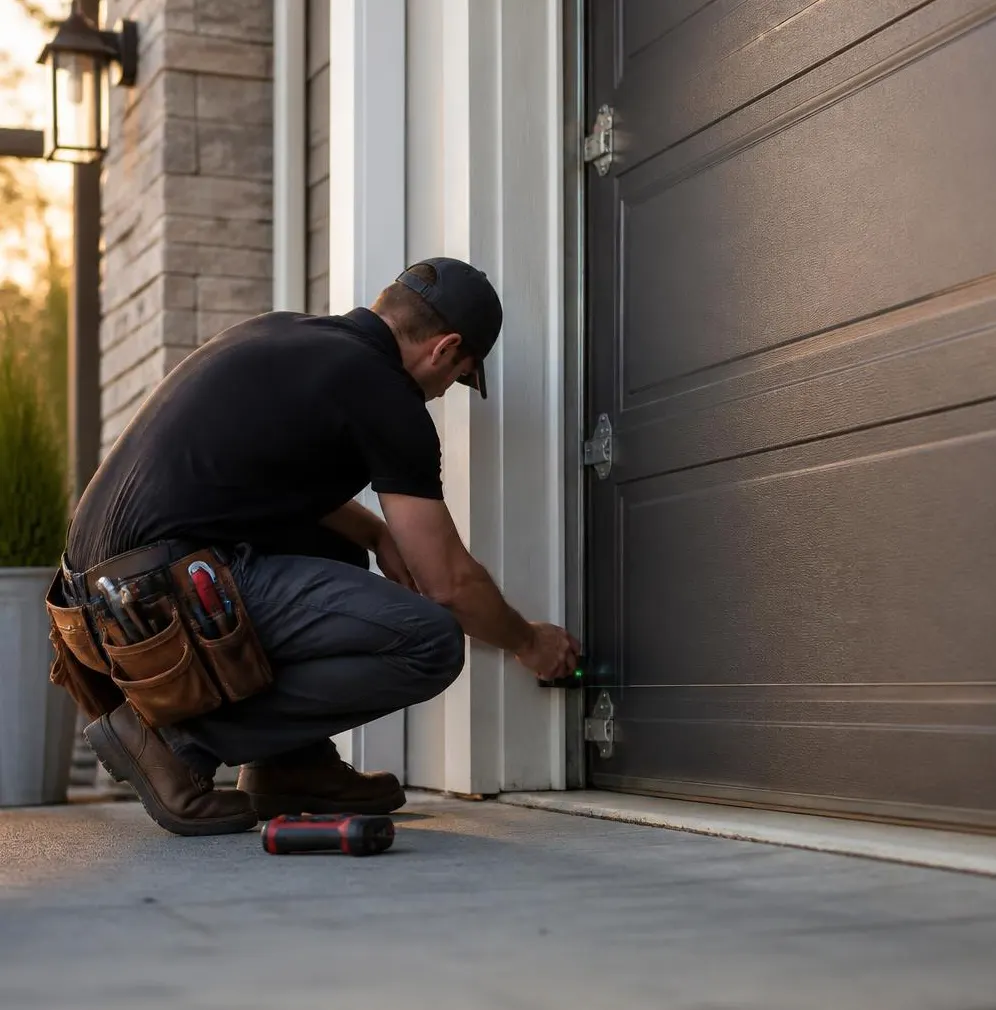
What a Technician Sees on This Call
A typical service call starts the same way: a homeowner notices a thin strip of daylight under the garage door, or they walk in after an afternoon downpour to find a puddle creeping across the slab. Sometimes it's palmetto bugs or lizards getting in along the bottom edge. Almost every time, the cause is the same — a cracked, flattened, or missing bottom seal, or weatherstripping along the sides and top that's pulled away from the frame. On older doors near the coast, the seal is often brittle and chalky from UV exposure, and the track holding it is packed with sand and grit from storm runoff.
This part of Florida is hard on rubber and vinyl. Heat and sun dry it out, humidity swells the wood jambs around the door so the gap changes with the seasons, and heavy rain pushes water sideways under pressure during wind-driven storms. It's a cheap part that takes a beating, which is exactly why it fails first.
Tools You'll Need
- Tape measure
- Utility knife or scissors
- Flathead screwdriver or small pry bar
- Replacement bottom seal (bulb-type or T-style, sized to your door width)
- Weatherstripping kit for the top and side jambs (vinyl or rubber with a retainer strip)
- Rubber mallet
- Shop vac or stiff broom
- Work gloves
- Stepladder
Step-by-Step: Replacing the Bottom Seal
- Identify your seal type. Open the garage door and look at the channel on the bottom edge of the panel. It's either a T-style slot, a bulb-style channel, or a simple J-style flange stapled on. Note the width so you buy a matching replacement.
- Buy the right length and profile. Standard retail seals run roughly $15–$40 depending on door width and seal type. Bring the old piece to the store if you're unsure.
- Clear the track. Lower the door and vacuum or brush out sand, leaves, and dried rubber fragments from the channel. This debris is often what's holding the old seal in a warped shape.
- Remove the old seal. Pull it straight out of the track, or pry up the retaining flange if it's a stapled-on style.
- Cut the new seal to length, leaving an inch or two extra to trim once it's seated.
- Feed the new seal into the track, starting at one end and working across. A little dish soap or silicone spray helps it slide through without binding.
- Close the door and check for gaps. Stand inside with the lights off during daylight and look for light coming through underneath. Uneven light usually means an uneven slab, not a bad seal — more on that below.
- Move to the side and top weatherstripping. Measure each jamb, cut the strips to length, and tap the retainer into place with the rubber mallet, following the gap along the full height and width of the frame.
What's DIY and What Isn't
Replacing the bottom seal and jamb weatherstripping is well within reach for most homeowners if the door itself is operating normally — opens and closes smoothly, sits level, and the track isn't bent. It's inexpensive, takes under an hour, and makes an immediate difference in drafts, dust, and pest entry.
Where it's time to call a technician: if the door doesn't close flush against the slab even with a new seal, if you see rust streaks or pitting on the bottom bracket or hinges (common with salt air near the coast), if the track is visibly warped, or if the gap is uneven side-to-side, which usually points to a leveling or roller issue rather than the weatherstripping. Anything involving the torsion spring, bottom brackets under tension, or opener force adjustments should go to a pro — those components store enough force to cause serious injury if handled wrong.
When to Call Port St. Lucie Garage Door Solutions
If you've replaced the seal and still get water intrusion, persistent gaps, or the door sits unevenly on the slab, that's a sign of an alignment or hardware issue beneath the surface. Our technicians handle this as part of routine Preventive Maintenance visits — checking rollers, hinges, and brackets for salt-air corrosion before they fail — and we also offer Garage Door Repair for tracks, panels, or openers that need more than a seal swap. We serve Port St. Lucie, Fort Pierce, Stuart, Jensen Beach, Tradition, St. Lucie West, Palm City, and Hobe Sound.
If your garage door is still letting in water, drafts, or pests after a DIY fix, call Port St. Lucie Garage Door Solutions and we'll get it sealed right before the next round of storms.